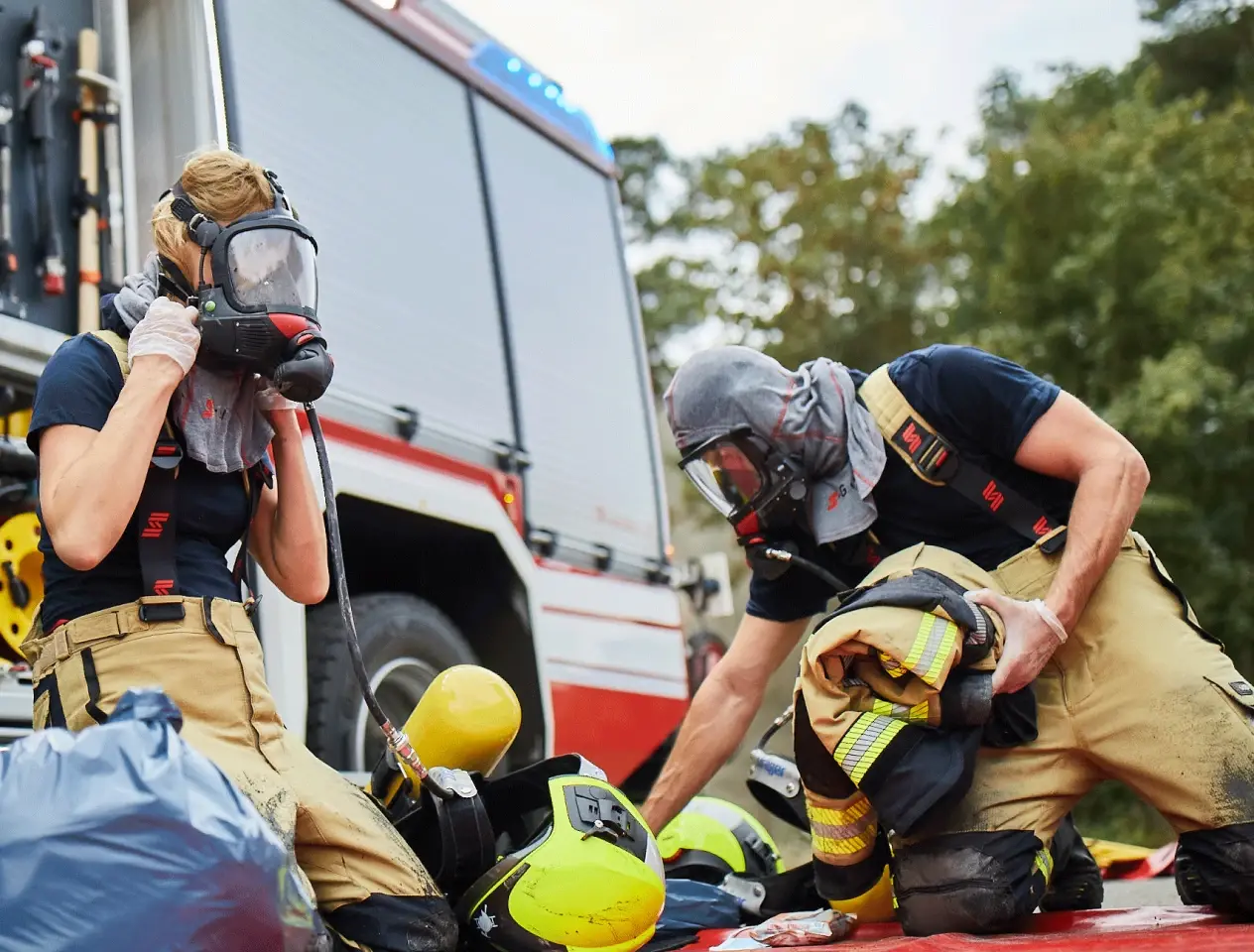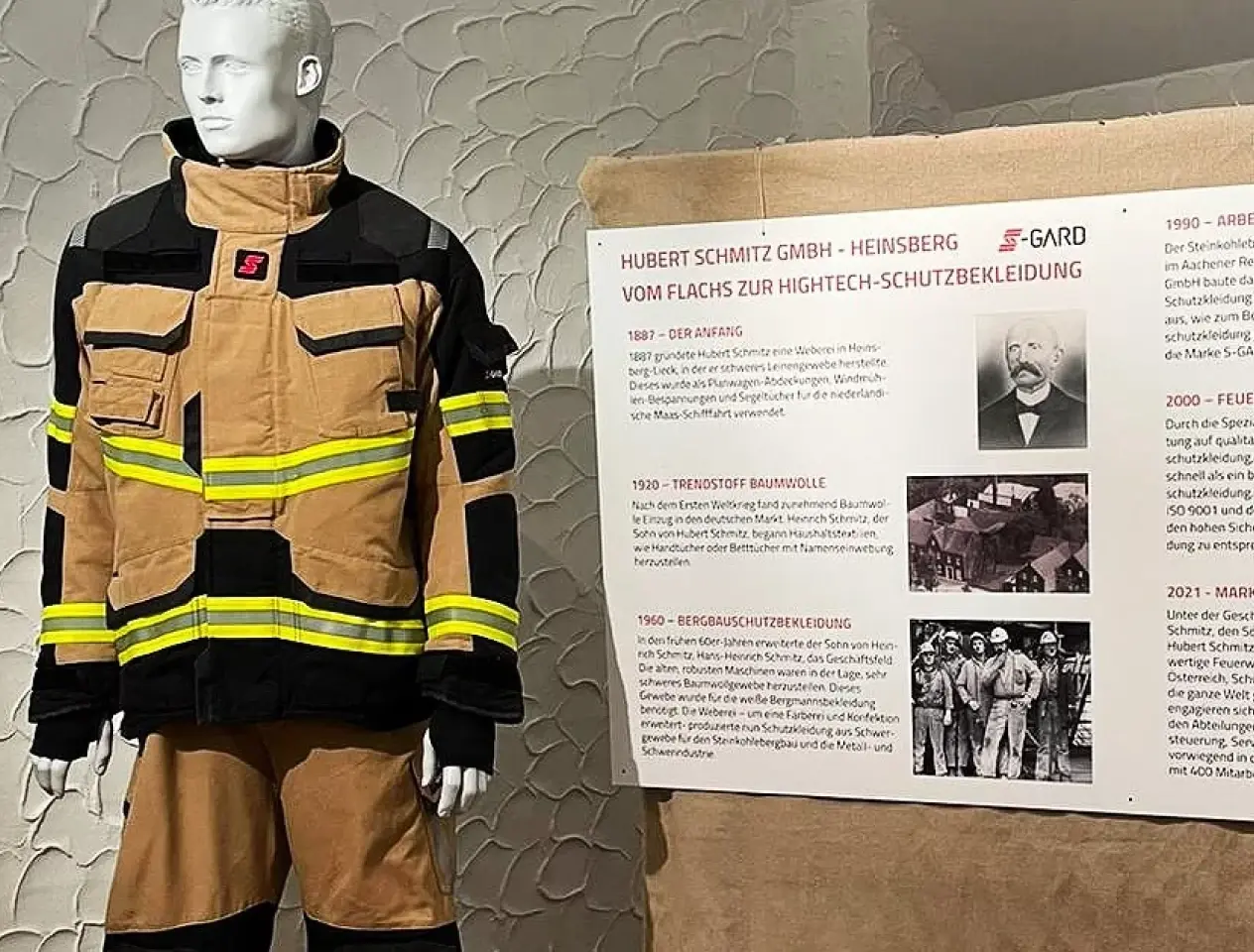

Visibility of overclothing
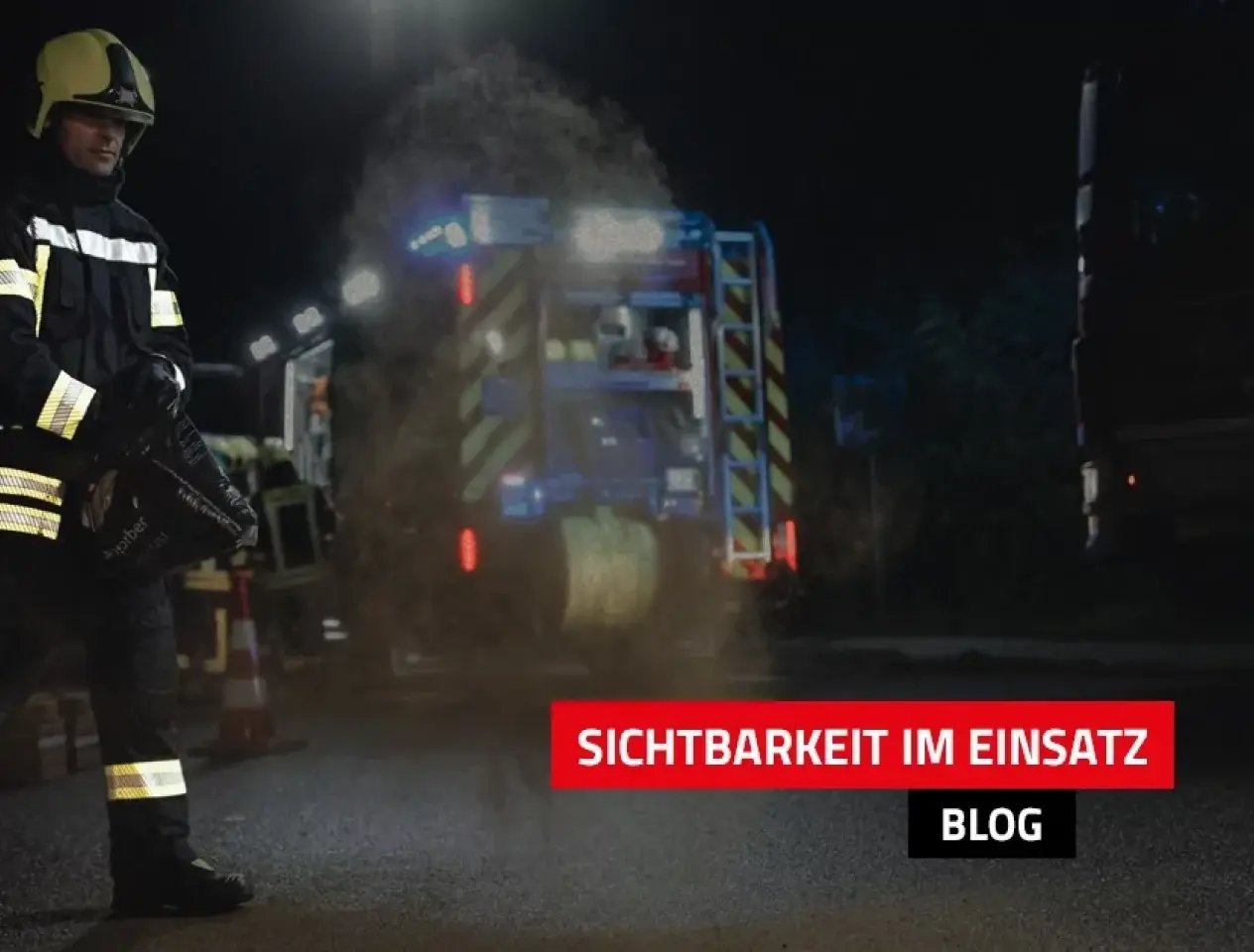
Visibility in use
Why is the firefighter’s overjacket considered a high-visibility waistcoat for firefighters and not for everyone else?
Strange, isn’t it? Why is that?
We would like to explain this to you.
To explain why this so-called high-visibility vest exemption only applies to firefighters, we need to go back a little.
Around 1996, German firefighters said goodbye to their leather coats as protection during firefighting operations. At that time, the so-called HuPF = manufacturing and testing specification for universal firefighter protective clothing was developed in Hesse. German firefighters were also to be provided with technical clothing that would reliably protect them from heat during firefighting operations, but could also (as the name suggests) be worn universally for many different firefighting operations. You probably know it from your own everyday life: you have many different types of operations, hardly any two are the same.
And for many operations you also need protection in road traffic, which means you need to be clearly visible. Because only those who are protected themselves can protect others.
Standard
There is a separate standard for the warning effect of protective clothing. This used to be DIN 471 and is now EN ISO 20471, which has special requirements for protective clothing by specifying how and which reflective material must be on how much fluorescent background material. In concrete terms, this can be easily visualised by a high-visibility waistcoat: This consists of fluorescent yellow or orange background material and has silver 5 cm wide reflective strips on it. Can you see where we’re going with this? If you compare your overjacket with a high-visibility waistcoat? There is no fluorescent background material and the silver reflective part of the reflective stripes is not 5 cm wide. In other words, the overjacket does not fulfil DIN 471 or EN ISO 20471, which is why it is not approved as high visibility clothing for non-firefighters.
Conclusion
But why for you? When the specialists sat together before 1996 to develop the HuPF, they realised that it made no sense to go into a firefighting operation wearing bright yellow clothing. That’s why they designed the black and blue suits with the yellow-silver-yellow stripes, in which the stripes have fluorescent and reflective surfaces. The additional contrast of the stripes on the dark background created a high warning effect. Together with the fire service accident insurance companies, it was then decided that this design would be considered equivalent to a high-visibility waistcoat for firefighters. This meant that the overgarment could then be worn like a high-visibility waistcoat. This original idea has been refined ever since. Over time, the amount of reflective material has been adjusted and this high-visibility vest exemption now also applies to gold and red clothing, for example.
The minimum amount of fluorescent and reflective surfaces must also be present on the smallest size. Now you can imagine that this is not so easy with small sizes.
Due to the diversity of firefighting operations, a separate standard for protective clothing has been developed: universal.