
Not an everyday occurrence for fire brigades in Germany
Fire on board!
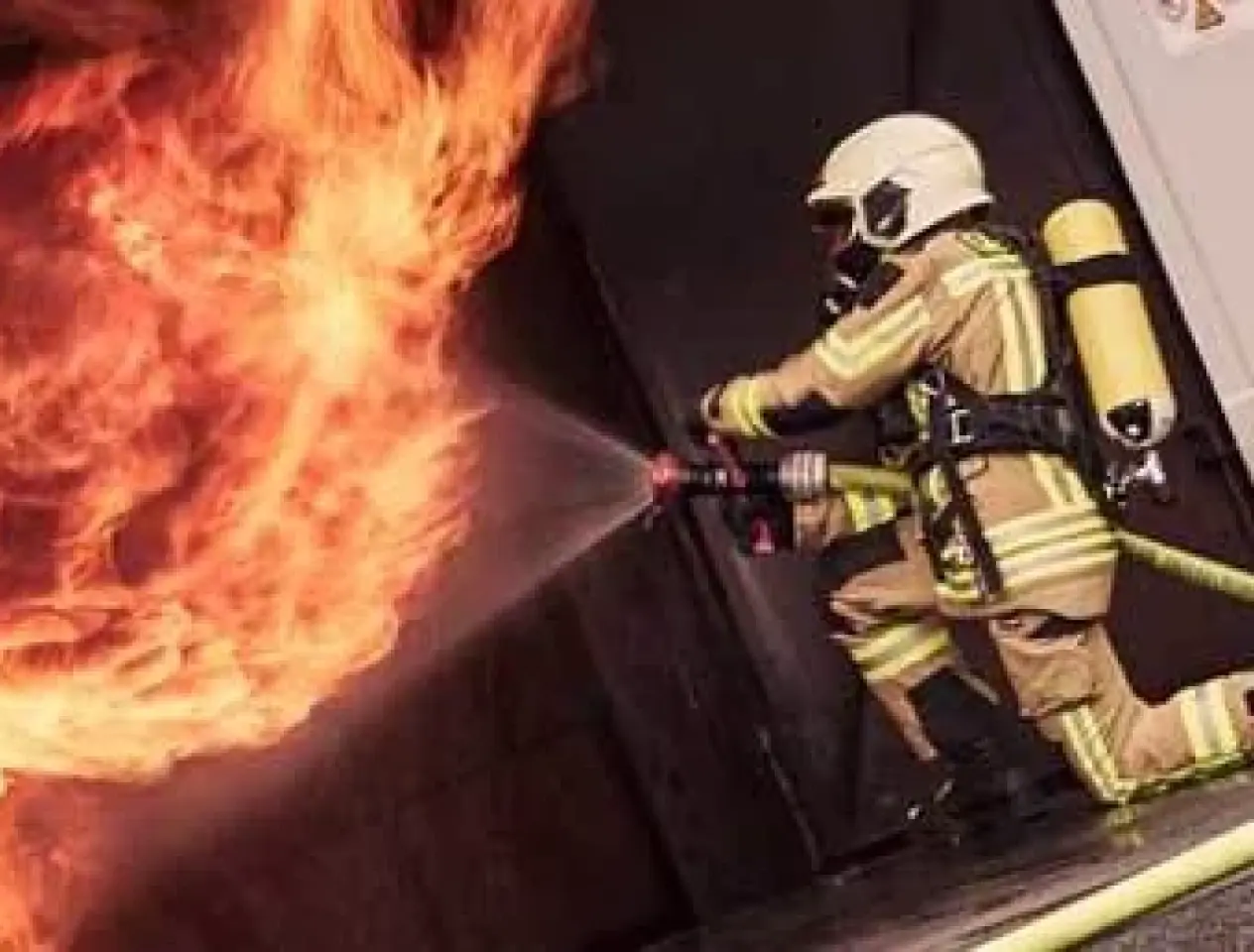
If a fire breaks out on a ship on the high seas, the crews on board are initially left to their own devices to fight the fire until – if necessary – the Central Command for Maritime Emergencies intervenes to provide support. However, the situation is different when a ship is in harbour: If a fire breaks out on board, the shore-based fire brigades are responsible.
However, ship fires are very specialised and can hardly be compared with normal fires on land: Narrow, windowless spaces, winding, labyrinthine corridors and thick metal walls that block all radio communication increase the demands on shore-based rescue teams enormously, as they are not specially trained for ship fires. Technical developments can save lives in these special emergencies.
The EFAS (Einsatzunterstützungssystem für Feuerwehren zur Gefahrenbekämpfung an Bord von Seeschiffen) project, which is supported by the Federal Ministry of Education and Research, is currently investigating how attack teams can be located inside a ship and their vital data recorded. In addition, digital site plans should be available more quickly and communication between the forces and the incident command should be stable and trouble-free. Direct environmental data such as temperatures or pollutant levels should also be transmitted to the incident command centre in real time so that operations under these extreme conditions can be better coordinated – and safer. The aim of this technical upgrade is to enable rescue teams to operate safely and more efficiently in unknown terrain in the future.
EFAS project increases safety for firefighters
The evaluation of the EFAS research project took place in September. „We have been carrying out projects in the field of civil shipping for many years. And we have realised that the fire brigade has problems locating its own people in the field – or obtaining information about the incident. So we decided to provide support with suitable systems,“ says Dr Daniel Feiser, joint coordinator of Fraunhofer FKIE.
The protective clothing of the future is being developed together with the specialist and clothing manufacturer S-GARD Schutzkleidung. „We want to drive our development forward and ensure the highest possible level of safety with intelligent protective clothing,“ says Michael Merboth from S-GARD. To this end, sensors in the tested protective clothing record data on temperatures and hazardous substances – in addition, acceleration and gyroscopic sensors on the boots track the movements of the emergency services personnel and thus their current location.
The data obtained is transmitted to the command vehicle via LTE radio communication and visualised in a situation display system. From the command vehicle, the situation picture is passed on to the fire service managers.
Karsten Müller, project partner ISV, was also very confident after the evaluation: „Today’s results have shown what possibilities modern technology offers, but also what limits are set by the ships and conditions on board. The technology continues to develop, and the Institute for Safety Engineering – Ship Safety has the opportunity to further develop the technology with projects like this.“
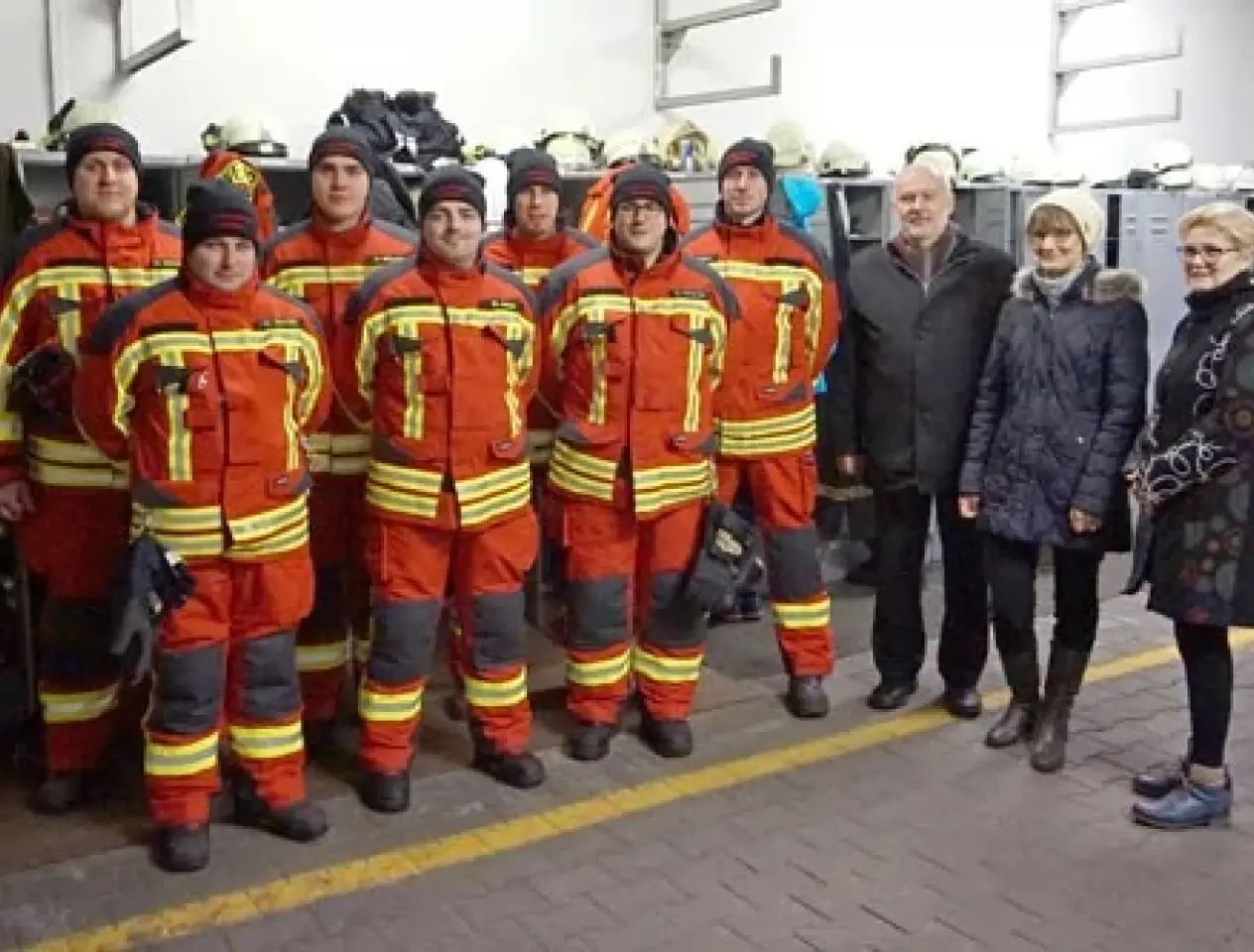
To ensure that the EFAS system fulfils all the requirements of future users, the project was supported by the Wilhelmshaven professional fire brigade. The evaluation was carried out with firefighters from the Rostock fire service. Nautical scientists, computer scientists, engineers and labour scientists worked hand in hand on EFAS. These interdisciplinary research projects are necessary in order to develop and test such complex, forward-looking support systems.